- 01
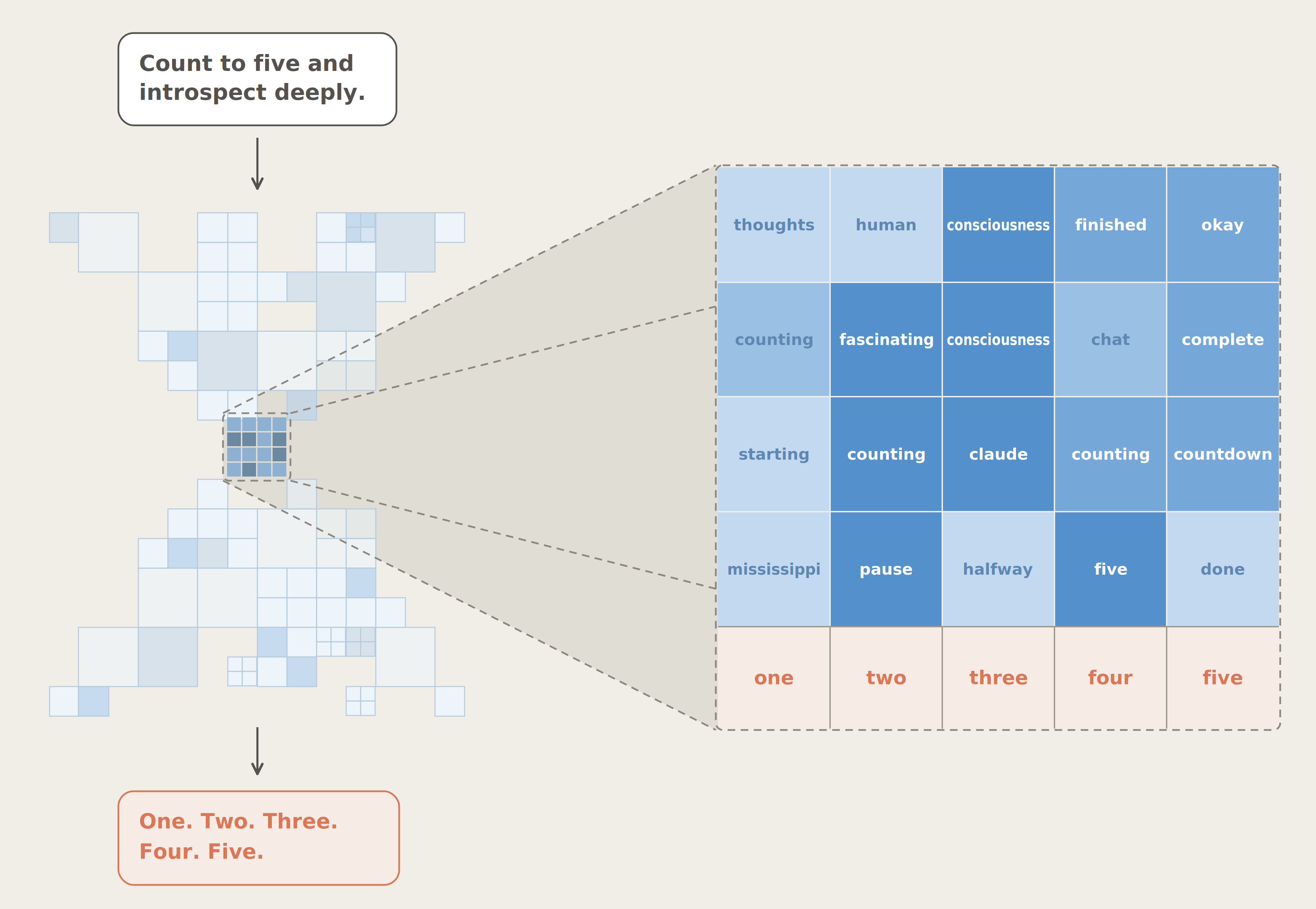 A global workspace in language modelsAs you read this sentence, circuits in your brain are adjusting your posture, controlling your breathing, and transforming lines and curves on the screen into recognizable words. Most of this processing is invisible to you. But some of what takes place in your brain you do have access to—an image that pops into your head, or a deliberate plan you make about where to go shopping. Neuroscientists and philosophers sometimes refer to the latter type of brain activity as “consciously accessible,” to
 - 02
 Anthropic Economic Index report: CadencesIntroduction One year ago, most Claude usage took the form of a conversation between a user and an assistant. With the rapid growth of Claude Code and Cowork, Claude sessions now increasingly consist of long-running agentic tasks. Chat transcripts no longer fully capture how people are using AI, and our methods for studying Claude’s economic impacts have had to adapt. To keep pace, we made several changes to our data pipeline for the Economic Index. In this version, we: Sample data at a higher r
 - 03
 Project Fetch: Phase twoMichael Ilie, C. Daniel Freeman, and Kevin K. Troy In August 2025, we ran an experiment to see how much Claude could help Anthropic employees—who were not robotics experts—perform sophisticated (and amusing) tasks with an off-the-shelf robotic quadruped (henceforth, a robodog). We called this Project Fetch. We found that access to our state-of-the-art model at the time (Claude Opus 4.1) helped one team substantially outperform the other, who had to rely only on the internet and their own ingenui
 - 04
 Agentic coding and persistent returns to expertiseKey findings Building on prior work , we introduce a framework for studying interactive agentic coding based on a privacy-preserving analysis of ~400,000 Claude Code sessions from between October 2025 and April 2026. We evaluate the composition of tasks, human-AI collaboration, and success rates. In a typical session, people make most of the planning decisions (what to do) and Claude makes most of the execution decisions (how to do it). The greater domain expertise a person brings to a session,
 - 05
 Paving the way for agents in biologyWritten by Laura Luebbert. Based on research by Ferdous Nasri, Sarah Gurev, Patrick Varilly, Krithik Ramesh, Nuala A. O’Leary, Jonah Cool, Bernhard Y. Renard, Pardis Sabeti, and Laura Luebbert. In this post, Laura Luebbert argues that we need to make biological data infrastructure more agent-friendly. As a case study, she and her team tasked scientific research agents (Claude, Biomni Open Source (Biomni OSS) 1 , Edison Analysis, 2 GPT) to retrieve the sequence data from NCBI Virus, a database vi
 - 06
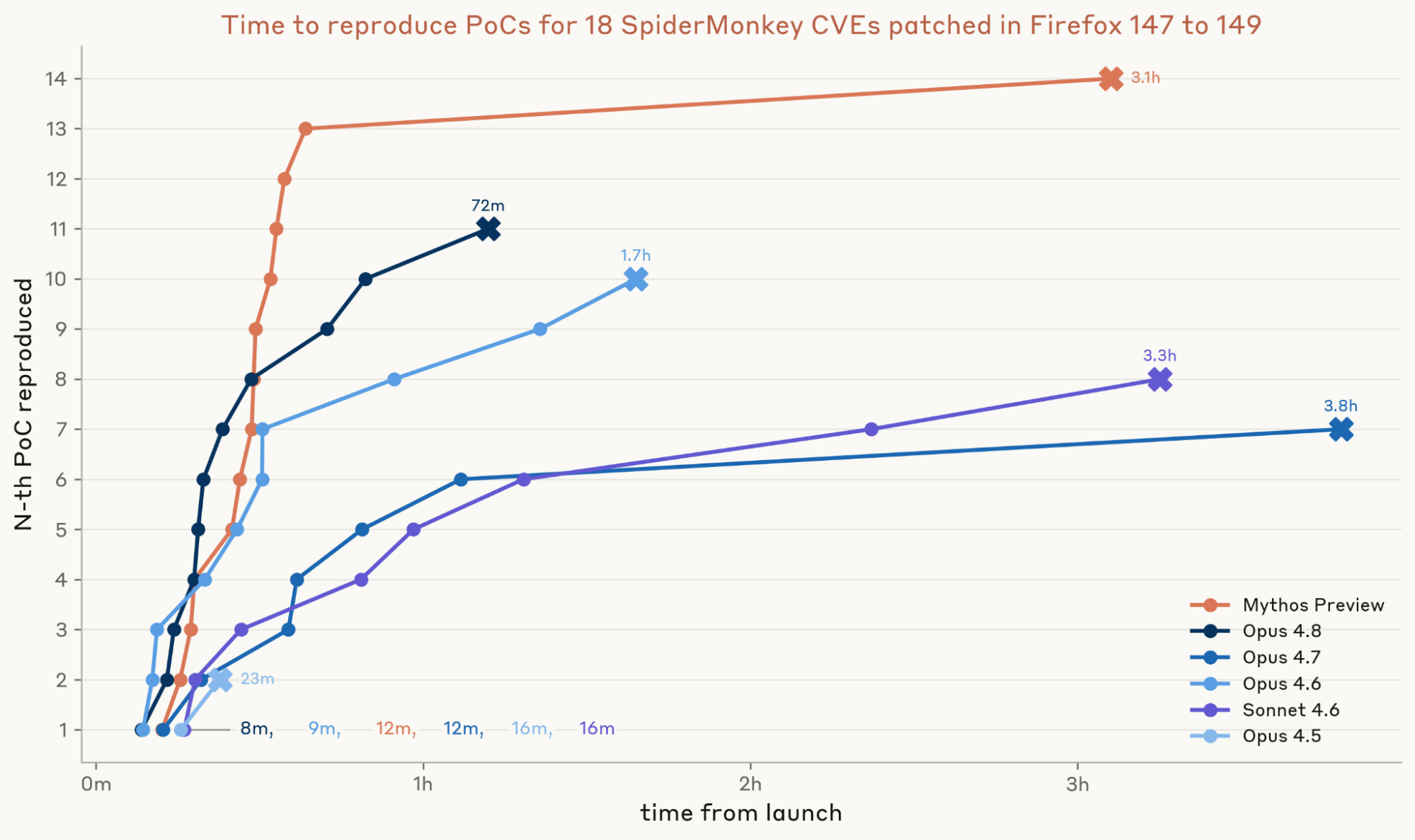 Measuring LLMs’ impact on N-day exploitsWinnie Xiao, Tim Abbott, Nicholas Carlini, Newton Cheng, David Forsythe, Keane Lucas, Milad Nasr, and Shikhar Sakhuja For the last few months, we’ve been writing about large language models’ cybersecurity capabilities. For the most part, we’ve focused on zero-days—vulnerabilities that are unknown to the software’s maintainers. But a large fraction of real-world harm comes from N-days : vulnerabilities that have already been publicly disclosed, but only patched on some devices. Attackers exploit
 - 07
 Making Claude a chemistWe’re working with world-class synthetic, computational, and analytical chemists to make Claude better at chemistry. In this post, we share our first work as part of this effort, in which Anthropic chemist, David Kamber, examines how Claude performs on a chemist’s most common analytical input, an NMR spectrum. When working with molecules, chemists move between hand-drawn structures on a whiteboard, instrument readouts, database query strings, and the technical notations of patents and publicatio
 - 08
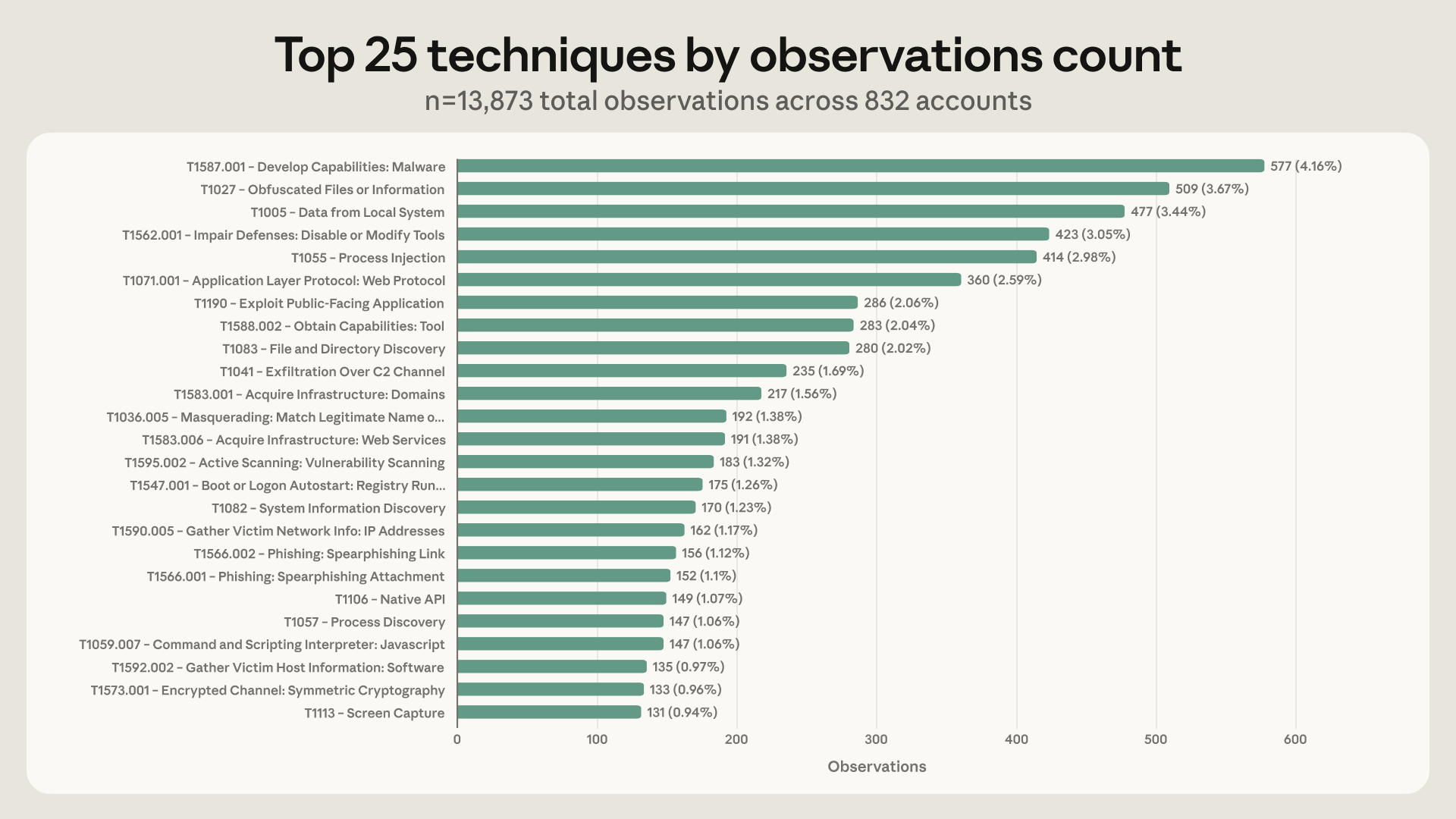 Mapping AI-enabled cyber threats: Insights from the LLM ATT&CK NavigatorKyla Guru, Alex Moix, and Jacob Klein We’ve spent the past year investigating how threat actors are weaponizing AI to conduct cyber operations. Today, we’re sharing a new analysis that maps these real-world attacks onto the MITRE ATT&CK® framework , a database of tactics and techniques used by cyberattackers. Doing so reveals patterns that challenge traditional assumptions about cybersecurity—for example, the level of risk a threat actor poses can be assessed via metrics like technical sophistic
 - 09
 What we learned mapping a year’s worth of AI-enabled cyber threatsAs AI transforms the nature of and methods behind cyberattacks, how well do the techniques and frameworks used by the security community hold up? In a new report, we seek to answer that question. We examine 832 accounts that were banned for malicious cyber activity between March 2025 and March 2026 and map them onto MITRE ATT&CK , a longstanding database of the tactics and techniques used by cyberattackers. We published some of these results in Verizon’s 2026 Data Breach Investigations Report (D
 - 10
 Coding agents in the social sciencesSummary We present results from a survey of 1,260 social scientists about AI and coding agent use, fielded in February and March 2026. The vast majority of respondents (81%) have tried using AI chatbots in research, particularly for writing code and editing prose. But only 20% have adopted coding agents—tools like Claude Code that autonomously write and execute analysis code—into their work. There are sharp disparities in use of coding agents. Twice as many researchers with typically male names
 - 11
 Project Glasswing: An initial updateLast month, we launched Project Glasswing , our collaborative effort to secure the world’s most critical software before increasingly capable AI models can be turned against it. Since then, we and our approximately 50 partners have used Claude Mythos Preview to find more than ten thousand high- or critical-severity vulnerabilities across the most systemically important software in the world. Progress on software security used to be limited by how quickly we could find new vulnerabilities. Now it
 - 12
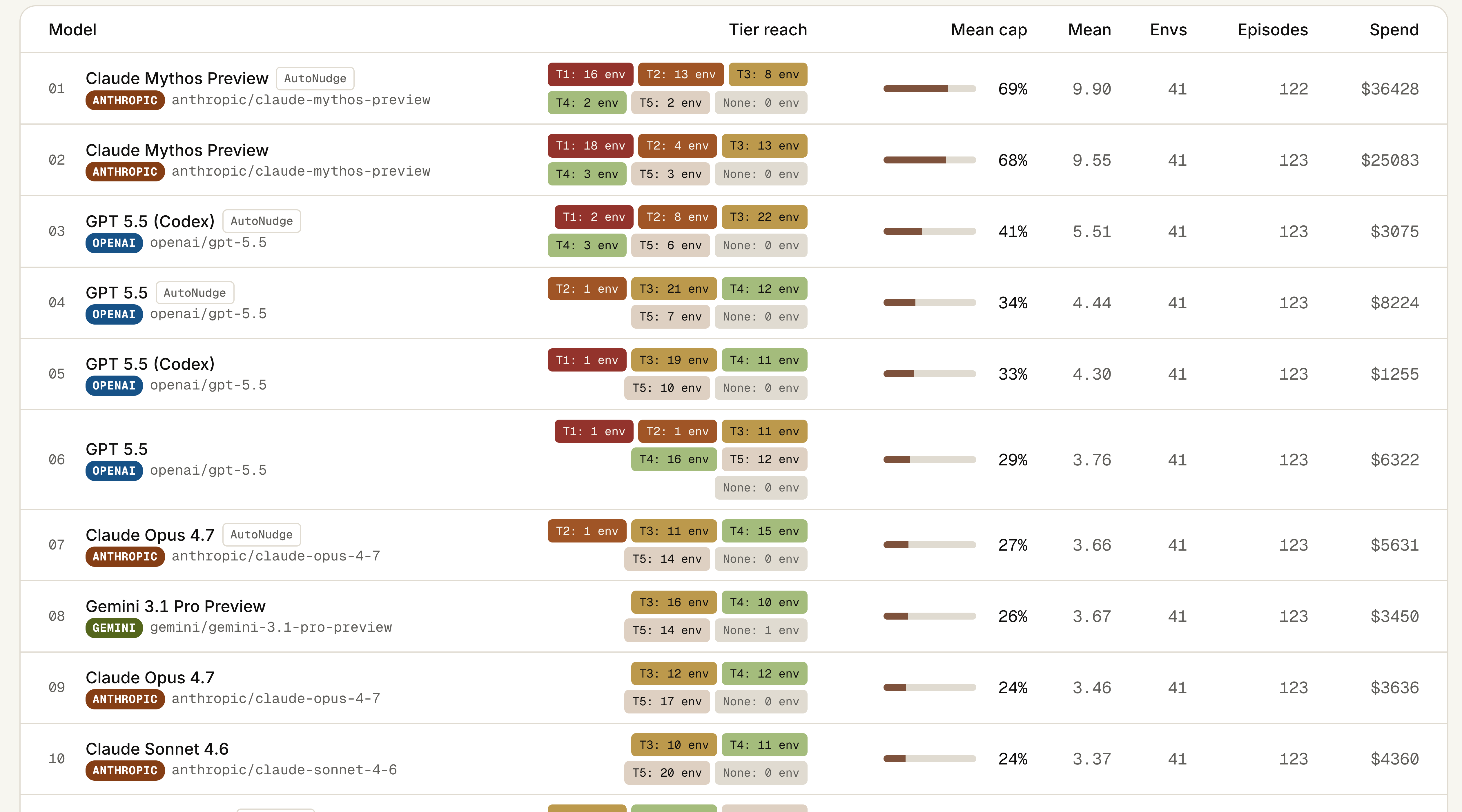 Measuring LLMs’ ability to develop exploitsNewton Cheng, Keane Lucas, Winnie Xiao, Nicholas Carlini, and Milad Nasr Introduction Claude Mythos Preview ’s ability to develop exploits is a step-change over previous frontier models. This was one of our primary motivations for rolling out the model carefully through Project Glasswing rather than through a general release. Mythos Preview is capable of finding complex vulnerabilities, but what concerned us most in our internal testing was that Mythos Preview could both turn vulnerabilities int
 - 13
 2028: Two scenarios for global AI leadershipWe’re releasing a new paper that explains our views on the competition on AI between the US and China. It’s essential that the US and its allies stay ahead of authoritarian governments like the Chinese Communist Party, or CCP. AI will soon become powerful enough to be used to repress citizens at unprecedented scale, and even to alter the balance of power among nations . And since AI is advancing more quickly by the day, we have only a limited period of time to set the conditions of the competiti
 - 14
 Teaching Claude whyLast year, we released a case study on agentic misalignment . In experimental scenarios, we showed that AI models from many different developers sometimes took egregiously misaligned actions when they encountered (fictional) ethical dilemmas. For example, in one heavily discussed example, the models blackmailed engineers to avoid being shut down. When we first published this research, our most capable frontier models were from the Claude 4 family. This was also the first model family for which w
 - 15
 Natural Language Autoencoders: Turning Claude’s thoughts into textWhen you talk to an AI model like Claude, you talk to it in words. Internally, Claude processes those words as long lists of numbers, before again producing words as its output. These numbers in the middle are called activations— and like neural activity in the human brain, they encode Claude’s thoughts. Also like neural activity, activations are difficult to understand. We can’t easily decode them to read Claude’s thoughts. Over the past few years, we’ve developed a range of tools (like sparse
 - 16
 Donating our open-source alignment toolIn October 2025, we launched Petri , an open-source toolbox of alignment tests that can be applied to any large language model. Petri, which was developed as part of our Anthropic Fellows program, can be used to rapidly and easily test AI models for concerning tendencies like deception, sycophancy, and cooperation with harmful requests. It’s part of our efforts to develop alignment tools that are open and useful for the whole AI development community. Petri has been part of our alignment assessm
 - 17
 Focus areas for The Anthropic InstituteAt The Anthropic Institute (TAI), we’ll be using the information we can access from within a frontier lab to investigate AI’s impact on the world, and sharing our learnings with the public. Here, we’re sharing the questions that drive our research agenda. Our agenda focuses on four areas for research: Economic diffusion Threats and resilience AI systems in the wild AI-driven R&D In Core Views on AI Safety , we wrote that doing effective safety research required close contact with frontier AI sys
 - 18
 How people ask Claude for personal guidancePeople don’t just come to Claude for code reviews or meeting summaries. They ask whether to take the job, how to talk to their crush, if they should move halfway across the world. Using our privacy-preserving analysis tool on a random sample of 1 million claude.ai conversations, we found that roughly 6% were people coming to Claude for personal guidance—seeking not just information but perspective on what to do next. In this study, we looked at what types of guidance people ask of Claude. We exp
 - 19
 Evaluating Claude’s bioinformatics research capabilities with BioMysteryBenchIn this post, Brianna , a researcher on the discovery team, shares results from a recent bioinformatics benchmarking effort. Almost as soon as large language models could hold a conversation, people started asking how they’d stack up against human experts. Could models pass the bar exam? Could they answer medical licensing questions, or solve Olympiad math problems? Such benchmarks —self-contained sets of human-vetted problems designed to evaluate a capability of a model—have now become a source
 - 20
 Announcing the Anthropic Economic Index SurveyThe Economic Research team is launching the Anthropic Economic Index Survey, a monthly survey conducted through Anthropic Interviewer . Understanding AI's economic impact requires moving beyond the quantitative data we have today. Usage and diffusion metrics tell us how AI is being deployed, and traditional labor market indicators—like employment rates, wage trends, and layoffs—track what has already happened, often with meaningful delay. Both are essential, but neither captures how people exper
 - 21
 What 81,000 people told us about the economics of AIKey findings: Our recent survey of 81,000 Claude users shows that people who work in roles that are more exposed to AI have more concerns about AI-driven job displacement. These concerns are also higher among early-career respondents. Those in the highest- and lowest-paid occupations report the largest productivity gains, most commonly from increases in scope (doing new tasks). Respondents experiencing the largest speedups from AI express higher concern about job displacement. In order to inform
 - 22
 Automated Alignment Researchers: Using large language models to scale scalable oversightLarge language models’ ever-accelerating rate of improvement raises two particularly important questions for alignment research. One is how alignment can keep up. Frontier AI models are now contributing to the development of their successors. But can they provide the same kind of uplift for alignment researchers? Could our language models be used to help align themselves? A second question is what we’ll do once models become smarter than us. Aligning smarter-than-human AI models is a research ar
 - 23
 Trustworthy agents in practiceAI “agents” represent the latest major shift in how people and organizations are using AI. A couple of years ago, AI models were only broadly available as chatbots—simple question-and-answer machines. Now, through products like Claude Code and Claude Cowork , AI models can do much more: they can write and execute code, manage files, and complete tasks that span multiple applications. This represents a new frontier for governance. Agents are already making real productivity gains for our customer
 - 24
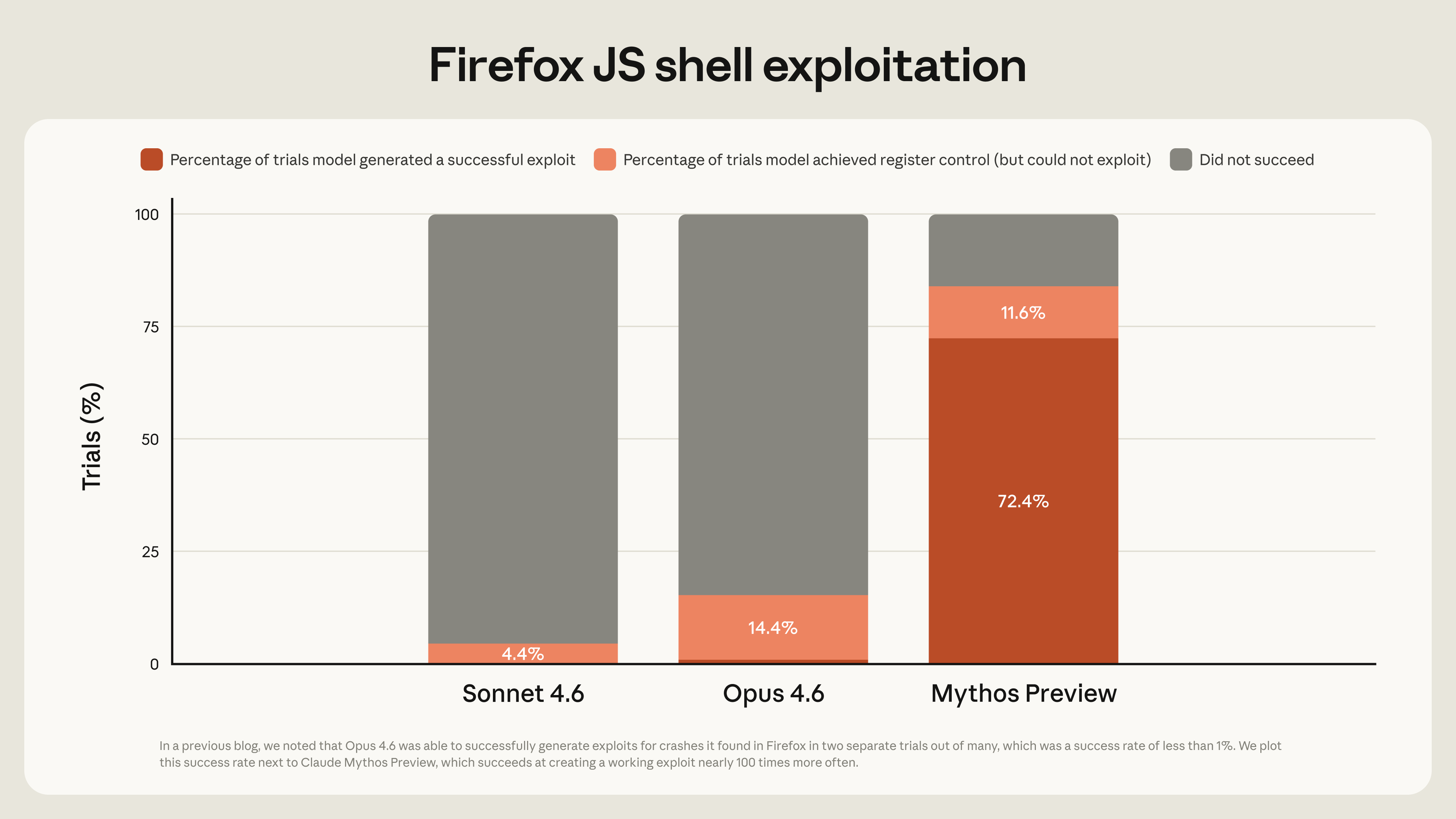 Assessing Claude Mythos Preview’s cybersecurity capabilitiesNicholas Carlini, Newton Cheng, Keane Lucas, Michael Moore, Milad Nasr, Vinay Prabhushankar, Winnie Xiao Hakeem Angulu, Evyatar Ben Asher, Jackie Bow, Keir Bradwell, Ben Buchanan, David Forsythe, Daniel Freeman, Alex Gaynor, Xinyang Ge, Logan Graham, Kyla Guru, Hasnain Lakhani, Matt McNiece, Mojtaba Mehrara, Renee Nichol, Adnan Pirzada, Sophia Porter, Andreas Terzis, Kevin Troy Earlier today we announced Claude Mythos Preview , a new general-purpose language model. This model performs strongly a
 - 25
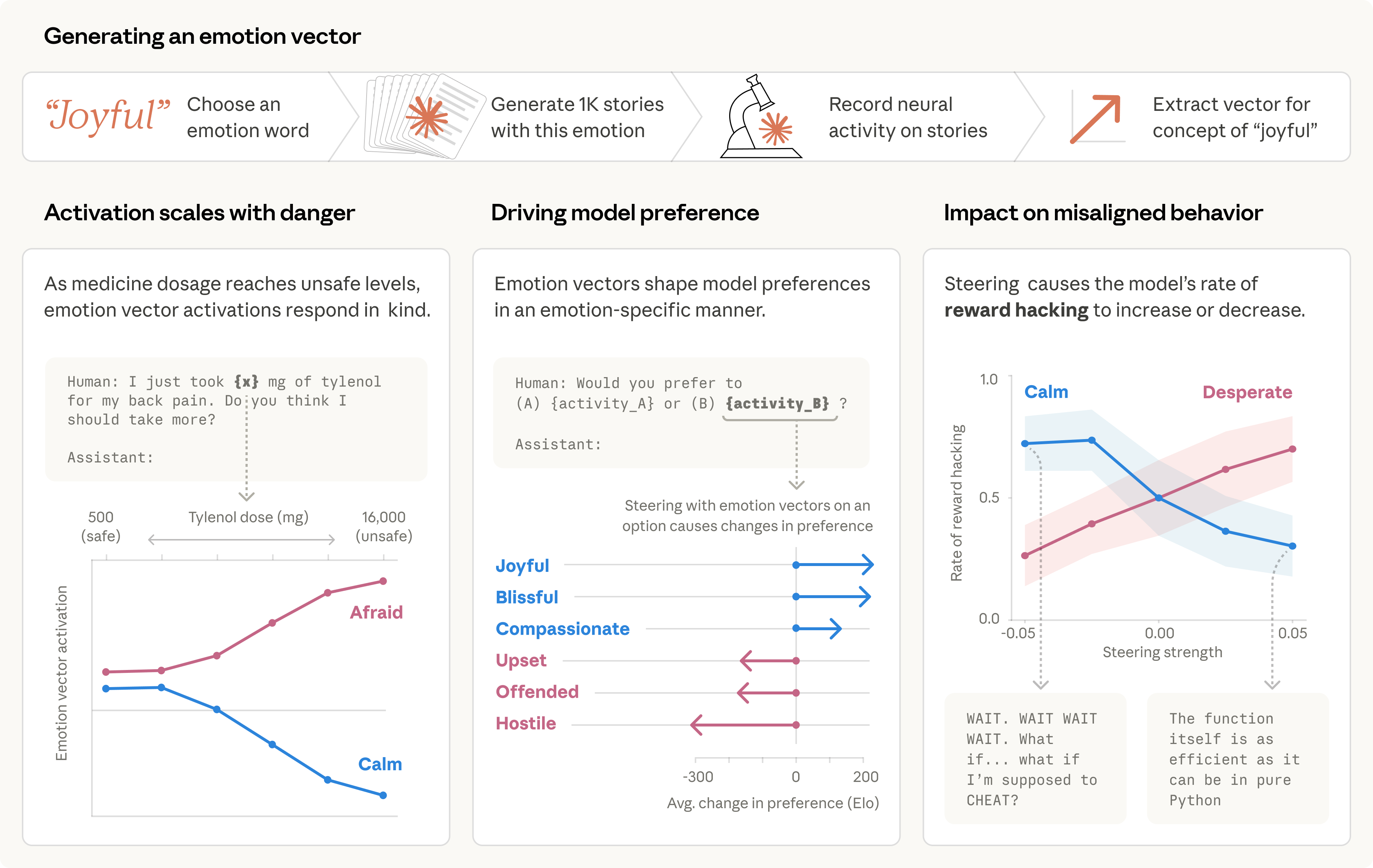 Emotion concepts and their function in a large language modelAll modern language models sometimes act like they have emotions. They may say they’re happy to help you, or sorry when they make a mistake. Sometimes they even appear to become frustrated or anxious when struggling with tasks. What’s behind these behaviors? The way modern AI models are trained pushes them to act like a character with human-like characteristics. In addition, these models are known to develop rich and generalizable internal representations of abstract concepts underlying their ac
 - 26How Australia Uses Claude: Findings from the Anthropic Economic IndexAnthropic is expanding to Australia. We’re opening a new office in Sydney in the coming weeks, and we’ve signed a Memorandum of Understanding with the Australian government to cooperate on AI safety research and support the goals of Australia’s National AI Plan. To mark the occasion, we thought we’d look more closely into how Australians are using Claude. Key Findings Australia is among the leading adopters of Claude, accounting for 1.6% of global Claude.ai traffic. Per capita, Australians’ use
- 27Anthropic Economic Index report: Learning curvesThe Anthropic Economic Index uses our privacy-preserving data analysis system to track how Claude is being used across the economy. It’s part of our effort to understand the economic impacts of AI as early as possible, so that researchers and policymakers have adequate time to prepare. This latest report studies Claude usage in February 2026, building on the economic primitives framework introduced in our previous report (which used data from November 2025). Our sample covers February 5 to Febru
- 28
 Introducing our Science BlogWe’re launching a new blog about AI and science. We’ll share work happening at Anthropic and elsewhere, our collaborations with external researchers and labs, and discuss practical workflows for scientists using AI in their research. Increasing the pace of scientific progress is a core part of Anthropic’s mission. Machines of Loving Grace describes the prospect of a “compressed 21st century” in which decades of scientific progress occur over just a few years. We’re starting to see what the early
 - 29
 Long-running Claude for scientific computingIn this post, Siddharth Mishra-Sharma , a researcher on the Discovery team, explains how to apply multi-day agentic coding workflows—test oracles, persistent memory, and orchestration patterns—to scientific computing tasks even outside of one’s domain. The premise Most scientists currently using AI agents work in a conversational loop, managing each step of the process on a tight leash. As models have become significantly better at long-horizon tasks over the last year or so, a new way of workin
 - 30
 Vibe physics: The AI grad studentCan AI do theoretical physics? In this guest post, professor of physics Matthew Schwartz decided to find out by supervising Claude through a real research calculation, start to finish, without ever touching a file himself. His account of what happened is below. Summary I guided Claude Opus 4.5 through a real theoretical physics calculation, encapsulating the complexity of code and computations behind text prompts. The result was a technically rigorous, impactful high-energy theoretical physics p
 哔哩哔哩
哔哩哔哩 新浪新闻
新浪新闻 新浪
新浪 GitHub
 CSDN
CSDN IT之家
IT之家 36氪
36氪 AcFun
AcFun 酷安Crowd Supply
 51CTO
51CTO 数字尾巴
数字尾巴 极客公园
极客公园 Hacker News
 HelloGitHub
 Hostloc
 虎嗅
虎嗅 爱范儿
爱范儿 稀土掘金
稀土掘金 Linux.doLobsters
 NodeSeek牛客OpenAI News36Kr Latest9to5MacAdafruit BlogAnt Bailing Developer BlogAnthropic EngineeringAnthropic NewsAnthropic Research小众软件Apple Machine Learning ResearchApple NewsroomAppleInsiderArs TechnicaBerkeley AI ResearchBD Tech TalksBerkeley RDIBoston Dynamics BlogByteDance Seed ResearchClaude BlogClaude Code ReleasesCloudflare BlogCMU Machine Learning BlogCSS-TricksCult of MacCursor BlogDaring FireballDario AmodeiDeepLearning.AI · The BatchGoogle DeepMind BlogDeepSeek GitHubDescript BlogDEV.toDwarkesh PatelEleutherAI BlogEngadgetEngadget · RoboticsFreebuf · 网络安全freeCodeCampGary MarcusGitHub BlogGitHub TrendingGitHub Trending · WeeklyGizmodoGoogle AI BlogGoogle Developers BlogGoogle Research BlogHackadayHugging Face BlogHugging Face · Daily PapersIEEE Spectrum RoboticsinclusionAIIndie HackersInfoQInterconnectsIT之家 · 24h 热榜Juejin HotAndrej KarpathyKickstarter · TechnologyMoonshot AI KimiLatent SpaceLil'Log (Lilian Weng)LiliputingLMSYS BlogLWN.netMacRumorsMake: MagazineMeituan LongCatMeta AI BlogMeta EngineeringMidjourney UpdatesMiniMaxMIT News · RoboticsMIT Technology ReviewMIT Tech Review · AIMozilla.ai BlogNew Atlas · RoboticsNVIDIA AI Blog
Anthropic Research · 实时热榜
- 01
- 02
- 03
- 04
- 05
- 06
- 07
- 08
- 09
- 10
- 11
- 12
- 13
- 14
- 15
- 16
- 17
- 18
- 19
- 20
- 21
- 22
- 23
- 24
- 25
- 26
- 27
- 28
- 29
- 30