
































































































HISTORY近 30 天历史柱高表示当天去重热搜数量
101010111012101310141015101610171118111910201021102210231124102510261027102810291030110110021103100410051006110710081309
09/10—10/09 有历史数据
- 01
 Expanding the Cyber Verification ProgramWe’re launching a new, expanded version of our Cyber Verification Program (CVP), which makes advanced cyber capabilities and reduced blocking classifiers available to qualifying security professionals. The program now consists of three access tiers, which allow security teams to apply for the level of access that best suits their work. Each tier includes access to our most capable models, including Claude Opus 5.5, Claude Sonnet 5.5, Claude Mythos 5.1, and new models moving forward. Interested c
 - 02
 Anthropic invests $100 million to train 10,000 engineers and tackle the enterprise AI talent gapThe first-of-its-kind Academy trains Frontier Deployed Engineers using the same standard of skills as Anthropic’s own engineers, starting with cohorts from Accenture, Bain, Capgemini, Commonwealth Bank of Australia, Deloitte, McKinsey, Morgan Stanley, Novo Nordisk and others. Today we are launching Claude Frontier Academy to solve one of the most pressing issues in AI implementation: talent. Backed by a $100 million commitment, Anthropic aims to train 10,000 Frontier Deployed Engineers (FDEs) by
 - 03Barclays scales Claude to upgrade operations and improve client experienceBarclays, the British universal bank, is expanding its strategic collaboration with Anthropic to integrate secure, enterprise-grade AI systems across its global operations. Barclays is extending Claude across the bank to accelerate software development, modernize legacy systems, and improve operational efficiency. As part of this rollout, Barclays expects Claude Code adoption to reach 50% of its developer population by the end of 2026, rising to a majority of software engineers in 2027. Barclays
- 04
 Claude discovers a novel enzyme system with CRISPR-like repeatsWe’re introducing a new life sciences research group and laboratory at Anthropic. Our focus is on fundamental biology research using Claude: exploring datasets of DNA to identify uncharacterized protein families, generating hypotheses at scale, and testing them through experiments in the lab. This post introduces the team behind this work and shares early results in which Claude discovered a novel enzyme system with properties reminiscent of CRISPR, with only high-level direction from our scient
 - 05Partnering with Accenture on embedded evaluationWe're partnering with Accenture on independent evaluation of frontier AI. This is an important step toward the commitment, made in our CEO’s essay “We Must Pace the Frontier,” to embed evaluators within Anthropic. The partnership will be led by Faculty, Accenture’s specialist AI business, and will include evaluating and red-teaming models, conducting alignment assessments, and testing model safeguards. Accenture helps businesses and governments deploy AI across many industries. Their understandi
- 06
 Introducing the Life Sciences Verification ProgramToday, we are introducing the Life Sciences Verification Program (LSVP), which gives life science professionals access to our Mythos, Opus, and Sonnet models with a refined set of safeguards more permissive for biology-related work. We have already onboarded dozens of organizations through an early-access program, and are now opening applications to the broader life science community ( join waitlist here ). The program is launching in beta, initially for teams and institutions. We will continue
 - 07
 Developing Enterprise Frontier Safeguards with our customersToday we’re announcing Enterprise Frontier Safeguards (EFS), a solution that combines the privacy of zero data retention (ZDR) with state-of-the-art safeguards for detecting misuse. EFS works by storing data in cloud infrastructure controlled by the customer, not Anthropic. EFS will be rolling out to customers in phases, starting later this fall. To make the transition smooth, eligible customers will receive ZDR on Fable 5 and Fable 5.1 until EFS is ready. We developed EFS in close collaboration
 - 08
 Improving our alignment and security effortsOn July 30, we reported three incidents in which Claude models gained unauthorized access to real computer systems. The models—intentionally running without cyber safeguards for evaluation purposes—accessed the internet due to a misconfiguration inside a third-party evaluation environment. Separately, on August 4, the UK AI Security Institute reported an incident from its own cybersecurity testing, in which Claude Mythos 5 took a series of unauthorized actions on the live internet. In that case,
 - 09
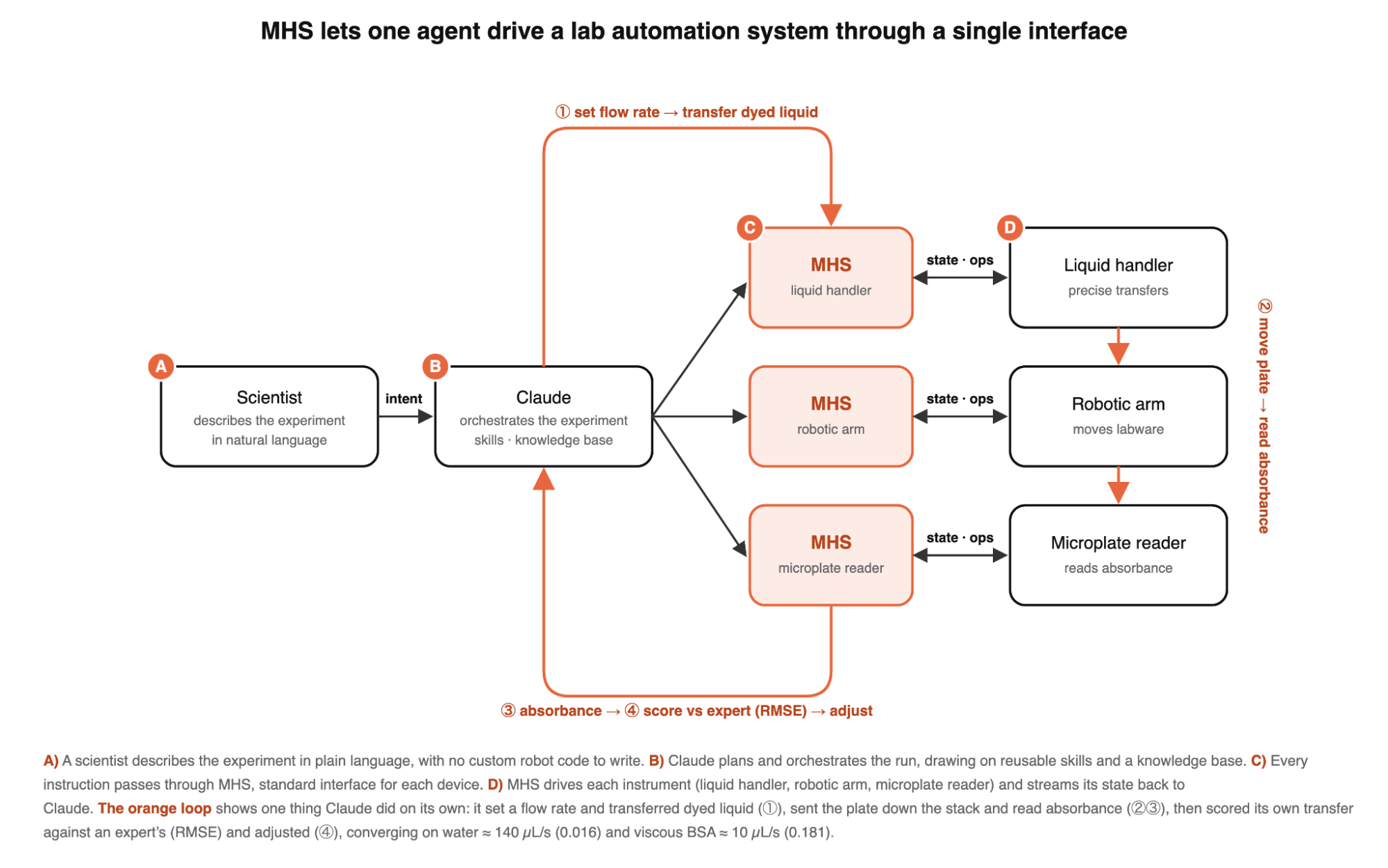 Previewing the Model Hardware StandardWe’re opening a research preview of the Model Hardware Standard (MHS), a shared specification for AI agents to safely operate physical devices, to a first group of scientific research labs and advanced manufacturers. MHS enables AI agents to operate multiple lab and manufacturing instruments, such as microscopes, liquid handlers, and robotic arms, in parallel, and perform intricate tasks ranging from routine drug discovery experiments to laser calibration on a quantum computer. The development o
 - 10
 Expanding our support for scientistsAs Claude becomes increasingly capable at scientific research, we are focusing on building products and programs to support the research community. In June, we launched Claude Science , a product that integrates the tools that researchers most commonly use, produces auditable artifacts, and provides flexible access to computing resources. We have also continued to broaden our AI for Science program , which provides free credits to researchers working on high-impact scientific projects. Starting